-
 8613931787312
-
 Botou Industrial Zone on the east side of National Highway 104, Botou City, Hebei Province


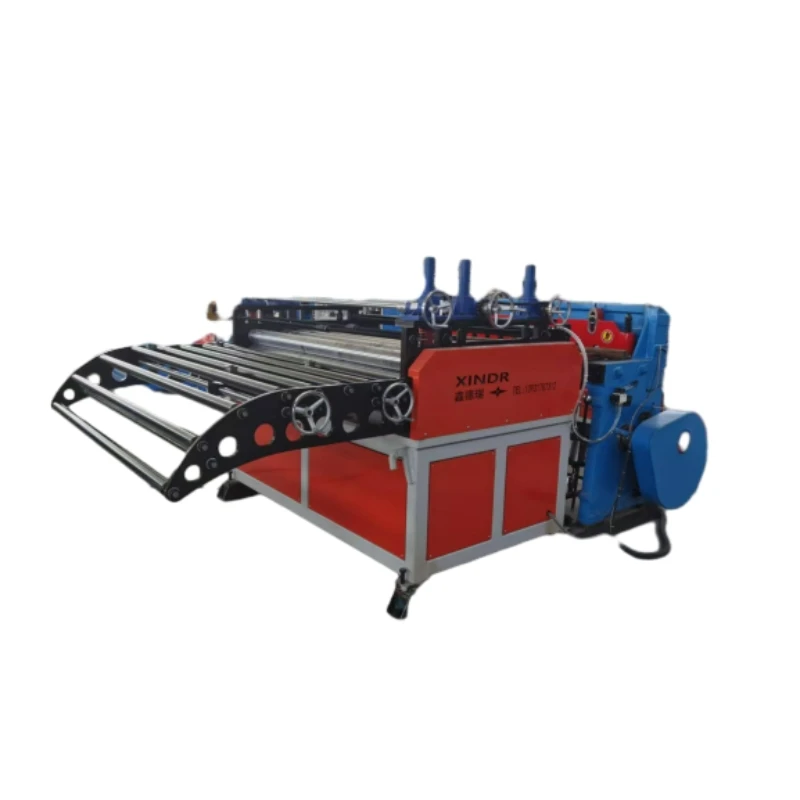
Vacuum Cleaner Bucket Production Line - Automatic, Turnkey
Inside the Next-Gen Vacuum Bucket Line: Speed, Consistency, and a Dash of Real-World Pragmatism
A few months ago I walked through a plant in Hebei that had just commissioned the new Vacuum Cleaner Bucket Production Line. The first thing you notice isn’t the noise (surprisingly low), it’s the rhythm—material in, finished bucket out, like clockwork. It’s made in the Botou Industrial Zone on the east side of National Highway 104, Botou City, Hebei Province—a place where sheet-metal know‑how runs deep. And, to be honest, that shows in the fit and finish.

What’s trending and why it matters
Industry-wide, OEMs are chasing shorter takt times, traceability, and energy savings. In fact, many customers say they’re replacing batch-style fabrication with continuous flow so they can scale SKUs without adding headcount. The Vacuum Cleaner Bucket Production Line lines up with that: fast production speed, high efficiency, and a footprint that’s smaller than you’d expect. It improves labor productivity, trims labor intensity, and—this is no small thing—keeps quality consistent shift after shift.
Process flow (real-world version)
- Materials: SPCC cold-rolled steel (≈0.5–0.8 mm), optional 304 stainless for premium SKUs; powder-coat finishing; gaskets in NBR/EPDM; plastics module (PP/ABS) for hybrid designs.
- Core methods: decoiling → leveling → CNC blanking → roll forming → deep drawing/beading → seam welding → flange curling → leak test → powder coating (optional) → final assembly.
- Testing: vacuum integrity at −20 kPa (leak rate < ≈0.5%/min, real-world may vary), weld penetration inspection, coating adhesion per ASTM D3359 (target 4B/5B), salt spray per ASTM B117 (≥240 h for coated parts).
- Service life: ≈8–12 years with quarterly PM; MTBF around 5,000–7,000 h for key actuators.
- Industries: household and commercial wet/dry vacs, central vacuum canisters, industrial shop vacs, and niche outdoor units.

Technical specs at a glance
| Parameter | Spec (≈, real-world use may vary) |
|---|---|
| Cycle time | ≈6–10 s per bucket (model-dependent) |
| OEE | ≈85–92% with standard staffing |
| Material thickness | 0.5–0.8 mm steel; 1.5–3 mm PP/ABS (if plastic module) |
| Energy use | ≈18–30 kWh / 100 buckets |
| Noise | ≤78 dB(A) at operator station |
| Certifications | CE (MD 2006/42/EC), ISO 9001; safety design per ISO 12100, IEC 60204-1 |
| Footprint | Compact layout; saves floor space vs. traditional cells |
Where it fits (use cases)
- High-mix appliance plants needing fast changeover. - Contract manufacturers chasing seasonal spikes. - Brands moving from plastic-only canisters to metal premium lines. Actually, one OEM told me scrap dropped by around 18% after switching.
Vendor landscape (quick reality check)
| Vendor | Lead Time | Price Level | After-Sales | Notes |
|---|---|---|---|---|
| XDR (Botou, Hebei) | ≈8–12 weeks | Mid | Local + remote, spares stocked | Strong sheet-metal modules; small footprint |
| Regional Integrator A | ≈10–16 weeks | Low–Mid | Basic; parts lead-time varies | Good for plastic-only lines |
| Imported Brand B | ≈14–22 weeks | High | Global network | Extensive analytics; bigger footprint |
Customization that actually helps
- Quick-change tooling for diameter/height families.
- Recipe-driven PLC with barcode/RFID for traceability.
- Optional plastic module (injection/thermal forming) for hybrid SKUs.
- Energy package: VFDs and smart compressors to shave kWh.
Field notes and feedback
Customers report smoother ergonomics (less manual handling), fewer reworks, and, interestingly, faster onboarding for new operators. One production manager said the Vacuum Cleaner Bucket Production Line “finally got our weekly output to match marketing’s promises.” I guess that’s the benchmark that counts.
Compliance and safety
Designed around ISO 12100 risk assessment, electrical safety per IEC 60204-1, and delivered with CE documentation under the Machinery Directive. Lockout/tagout points are clearly marked; light curtains guard pinch zones. Seems basic, but you’d be surprised how often this is overlooked.
Authoritative references
- ISO 12100: Safety of machinery — General principles for design.
- IEC 60204-1: Safety of machinery — Electrical equipment of machines.
- Machinery Directive 2006/42/EC (CE).
- ASTM D3359 (Coating Adhesion) and ASTM B117 (Salt Spray) for finish evaluation.
-
210l steel drums for sale: choosing between two welding machinesNewsNov.09,2026
-
Steel Drum Welding Machine FAQ: Utilities, Materials and Parts PlanningNewsNov.02,2026
-
Automatic Seam Welding Machine Comparison: Forward Feed Tank vs. 1.8-Meter Model — Operating Requirements, Interfaces and MaintenanceNewsOct.28,2026
-
Choosing a Hydraulic Sealing Machine: Working Requirements and Integration FitNewsOct.27,2026
-
Choosing a Corrugated Metal Elbow Production Line: Application Fit and Specification ChecksNewsOct.22,2026
-
Precision Engineering with 3 roll plate bending machine GuideNewsJul.01,2026
-
Precision Engineering and Efficiency with Automatic Conduit BenderNewsJun.29,2026
-
 Fully Automatic Kaiping Production LineOct . 17, 2024
-
 Automatic Rolling MachineSep . 14, 2024
-
 Hydraulic Flanging MachineSep . 14, 2024